Product details
Physical Properties of NaOH – Sodium Hydroxide
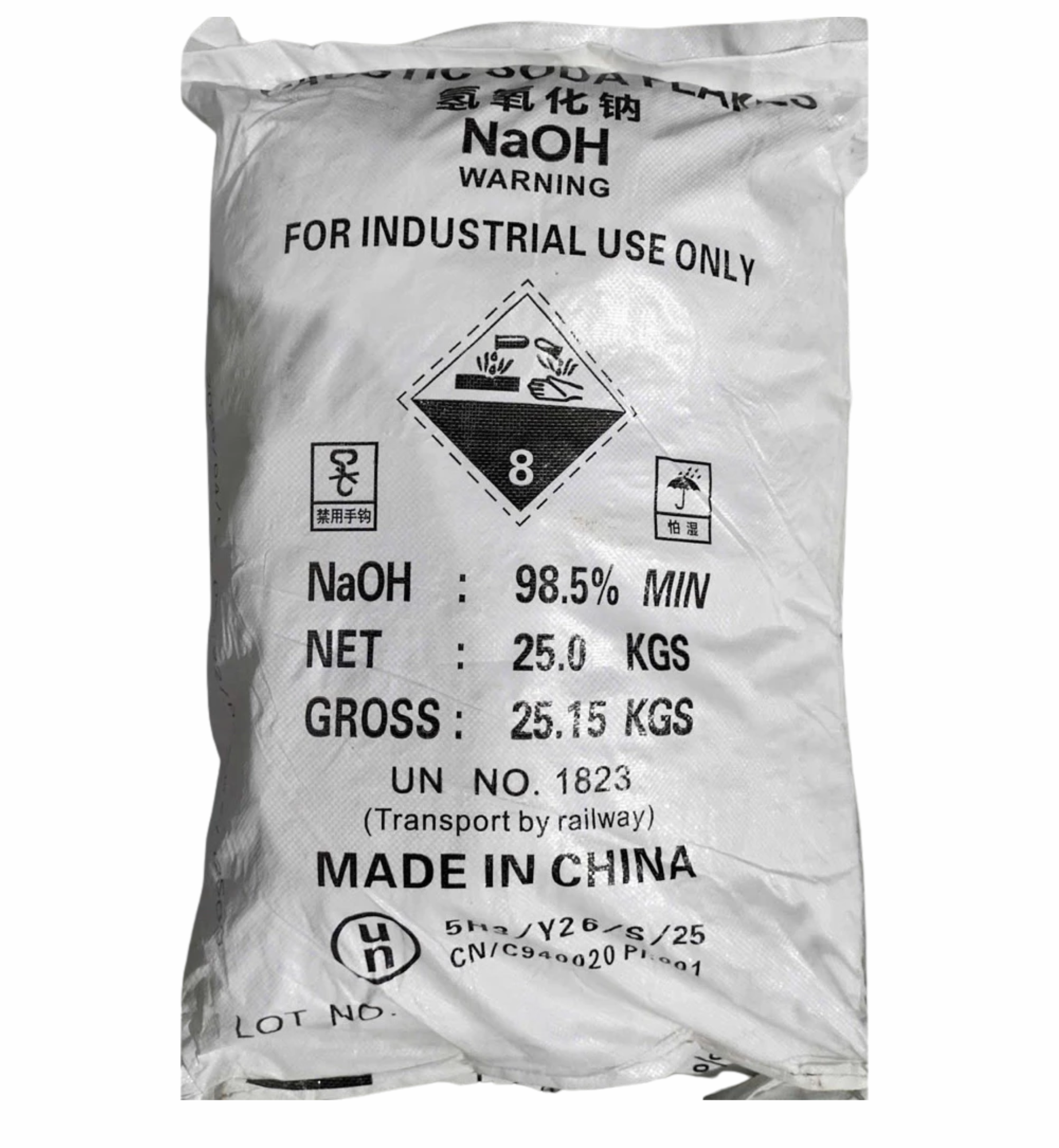
Chemical Name: Sodium Hydroxide (NaOH), commonly called caustic soda
Form: Solid flakes, pellets, granules, or 50% saturated liquid solution; highly hygroscopic and prone to clumping
Odor & Taste: Odorless
Molecular Weight: 40 g/mol
Melting Point: 318 °C
Boiling Point: 1390 °C
Density: 2.13 g/cm³ (water = 1)
Solubility: Highly soluble in cold water, exothermic upon dissolution
pH: ~13.5
Corrosiveness: Highly corrosive to metals, skin, and organic tissues
Industrial Applications of NaOH
Water & Wastewater Treatment
- Adjusts pH of wastewater (neutralizes acids, increases pH)
- Supports coagulation and flocculation processes in industrial wastewater treatment
- Neutralizes acidic water in plating, paint, and textile industries
Paint & Metal Surface Pre-Treatment
- Component in degreasing and surface cleaning chemicals before painting
- Removes oils, grease, and organic residues from steel and iron surfaces before phosphating, powder coating, or CED coating
Pulp & Textile Industry
- Pulp cooking and fiber treatment
- Alkalinity adjustment during washing, bleaching, and dyeing processes
Food Industry (Specialized Grade)
- Used in specific food processing steps (CIP cleaning, peeling, pH adjustment) with food-grade NaOH
Advantages of Using NaOH
- Highly effective in increasing pH and neutralizing acids
- Affordable and widely available with stable supply
- Strong alkalinity enhances cleaning efficiency for oils and organic matter
- Easily soluble and easy to dose in automated chemical dosing systems
Safety Precautions
Occupational Safety:
- Wear protective equipment: rubber gloves, safety goggles, mask, chemical-resistant clothing
- Avoid direct contact with skin and eyes
- When diluting, always add NaOH to water, never the reverse, to prevent splashing due to heat generation
Storage:
- Store in a dry, sealed container; avoid moisture
- Keep away from aluminum, zinc, and strong acids