- Home
- Introduction
- Products
- Shop
- News
- Library
- POLICY

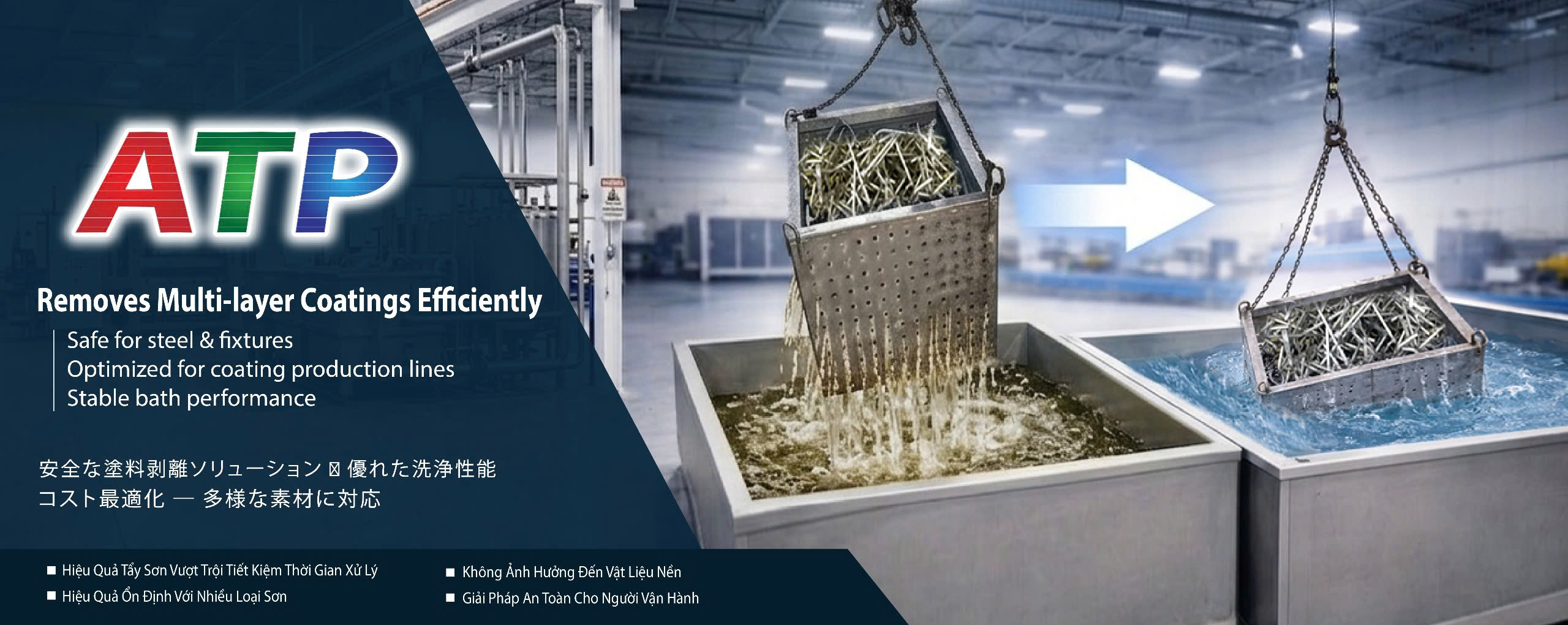
In industries such as powder coating, component manufacturing, mechanical engineering, and automotive production, the removal of old paint, defective coatings, or cleaning of jigs and fixtures is a frequent requirement. Paint stripping chemicals have therefore become an essential solution to help businesses optimize costs and improve production efficiency.

Currently, paint removers can be classified into several main groups:
Solvent-based Paint Removers
Typically contain methylene chloride, NMP, or organic solvents. They provide fast and highly effective paint removal. However, they have strong odors and high volatility.
Alkaline-based Paint Removers
Mainly composed of alkaline chemicals. They offer fast stripping performance and low cost. However, improper control may lead to corrosion of material surfaces.
Environmentally Friendly Paint Removers
Free from harmful solvents; low odor and safer for operators; aligned with green manufacturing trends. However, the stripping time may be longer compared to conventional products.
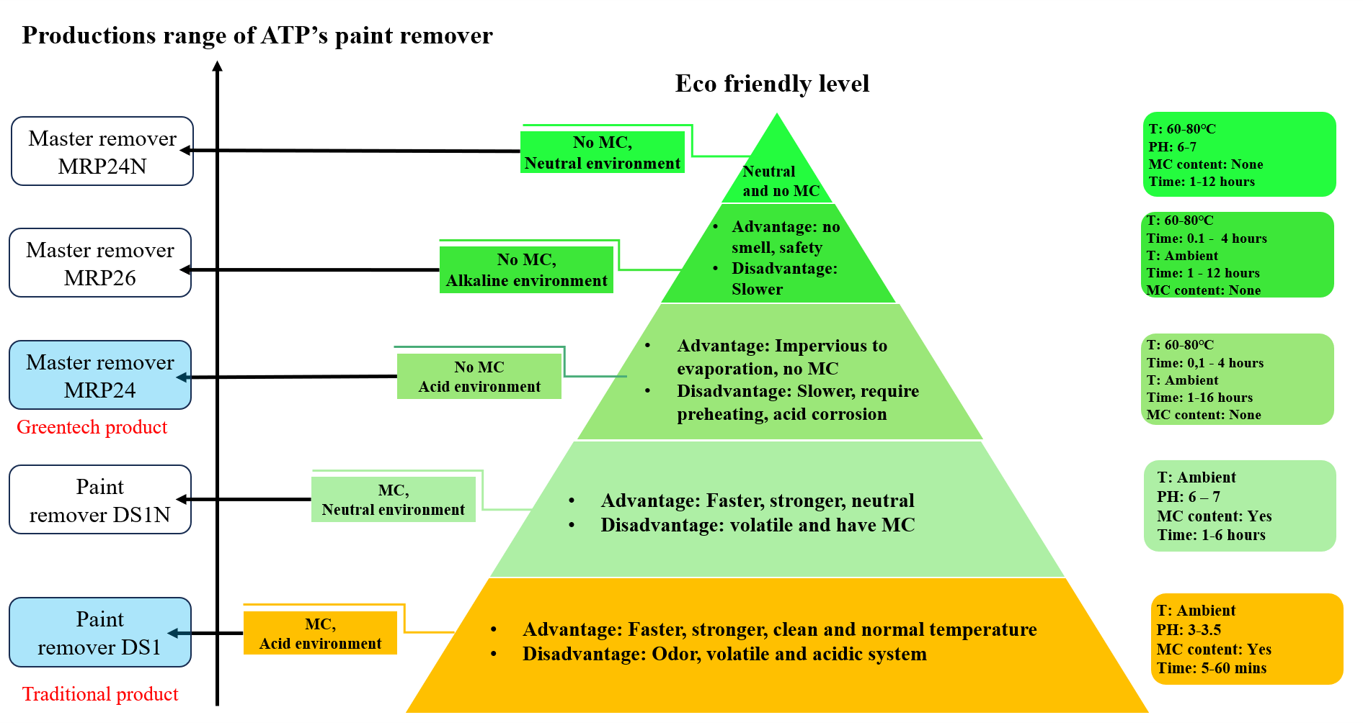
In response to increasingly stringent market requirements regarding stripping efficiency, operational safety, and environmental factors, traditional solutions are showing many limitations. ATP has focused on researching and developing specialized paint remover products, flexibly designed to meet the practical needs of each business.
From high-speed paint removers for large-scale production lines to environmentally friendly and user-safe solutions, ATP offers a diverse product portfolio optimized for both treatment efficiency and operating costs.
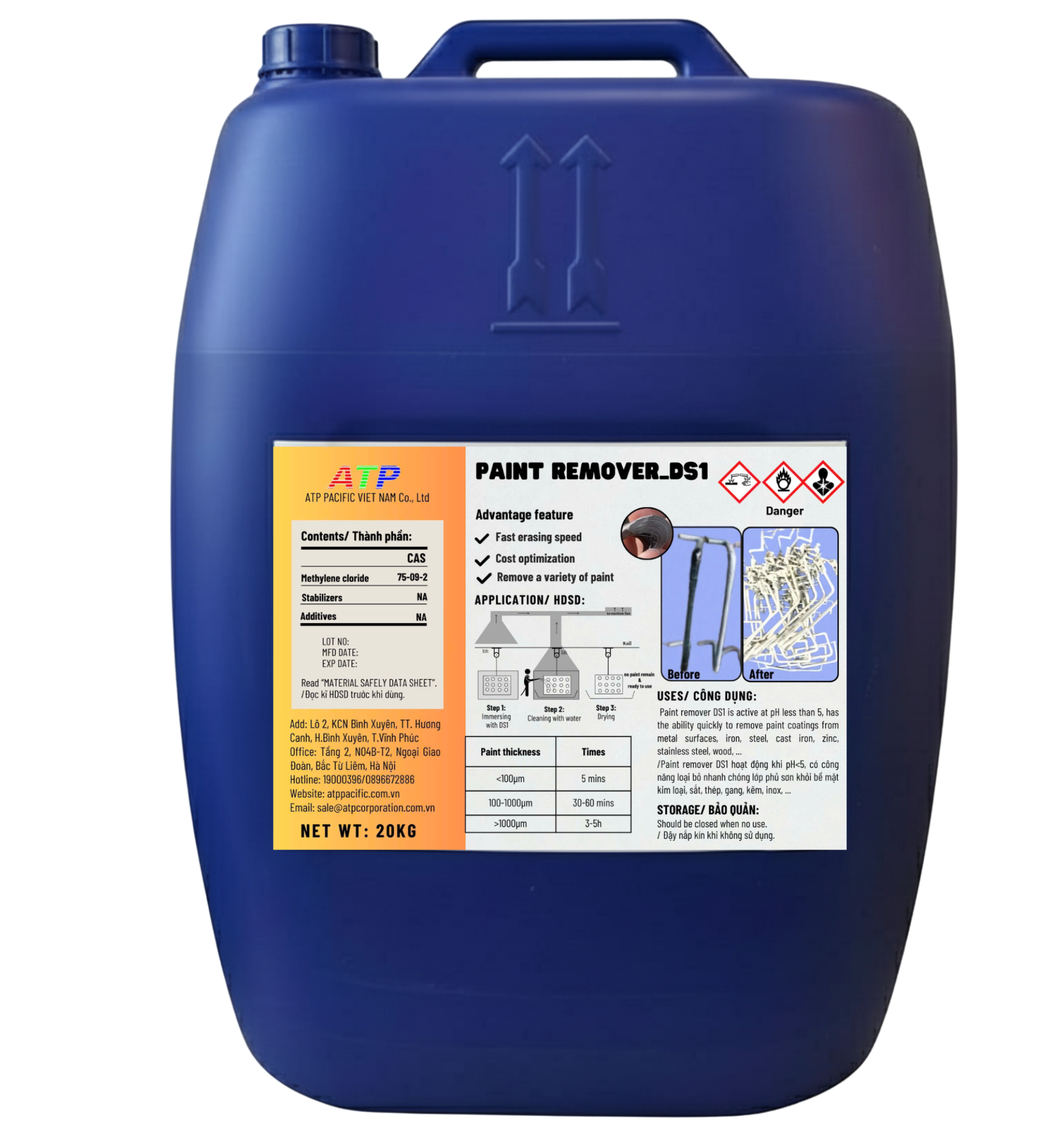
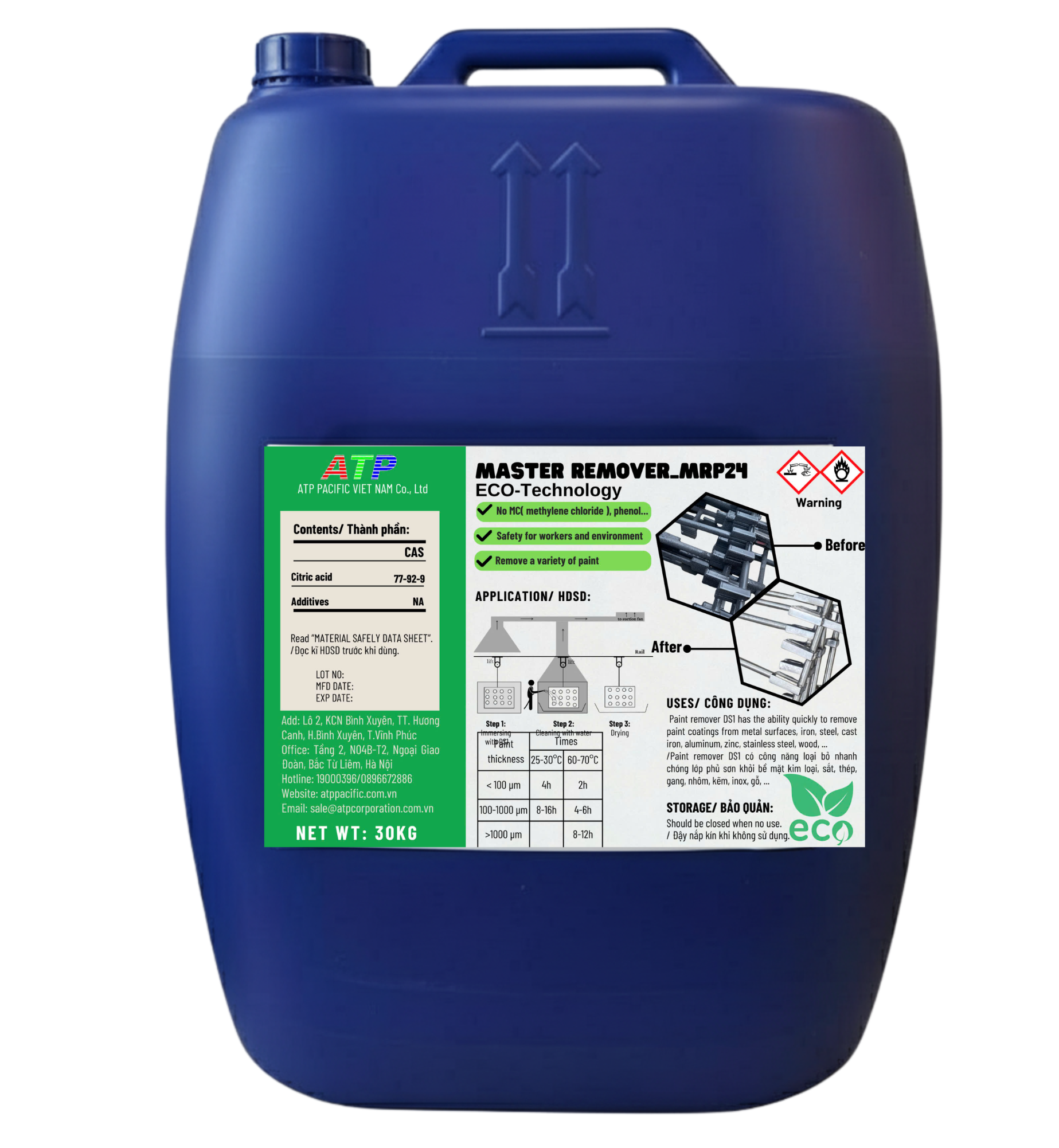
ATP Paint Remover Product Lines: