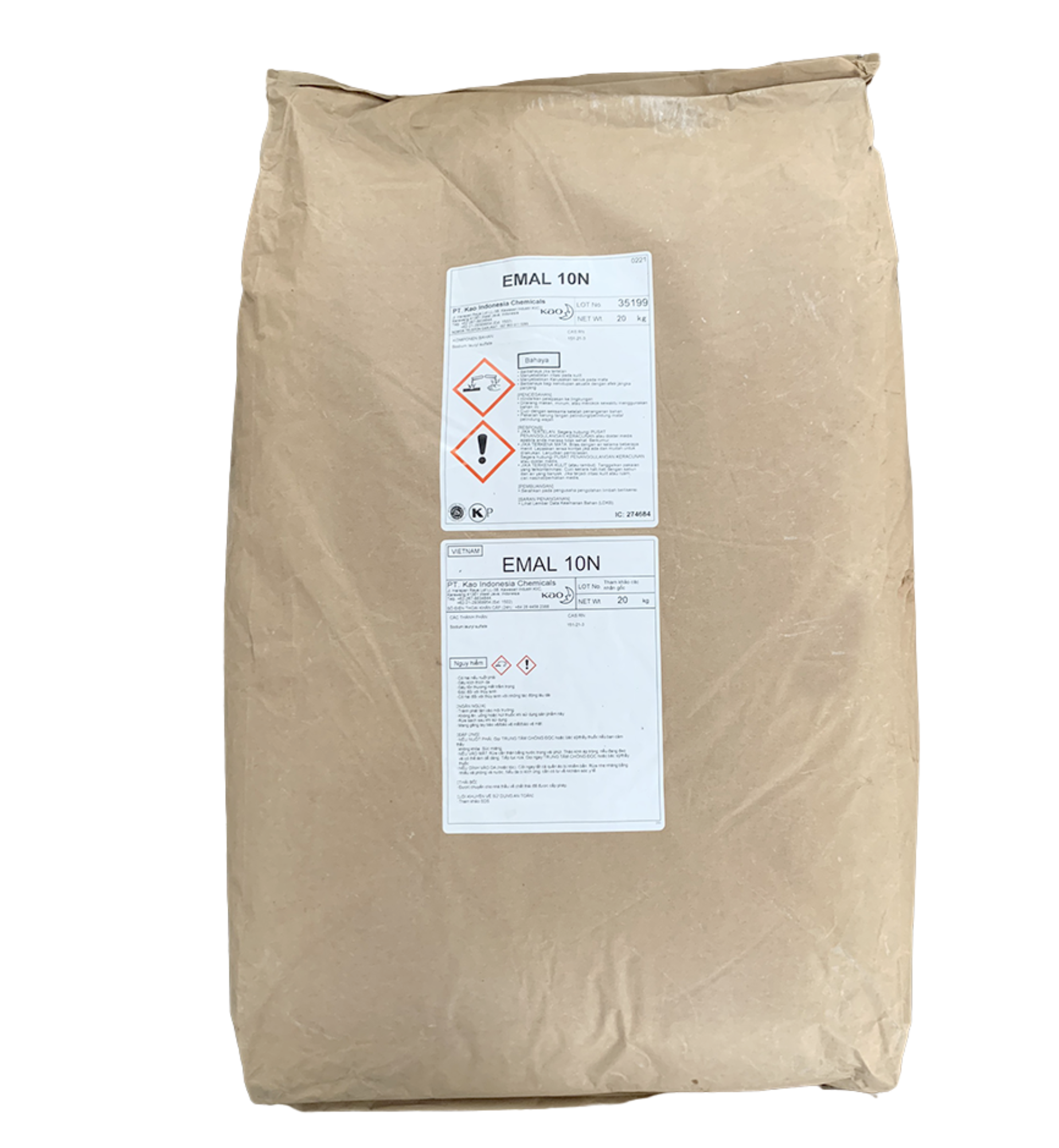
Product details
General Information on Sodium Lauryl Sulfate (SLS)
- CAS No.: 151-21-3
- Packaging: 20 kg/bag, 25 kg/bag
- Origin: Indonesia, China
- Other names: SLS, Sodium dodecyl sulfate (SDS), foaming agent

Physical and Chemical Properties
- Appearance: White granular solid
- Chemical formula: CH₃(CH₂)₁₁OSO₃Na
- Molar mass: 288.372 g/mol
- Density: 1.01 g/cm³
- Melting point: 206°C
- Structure: Consists of a straight-chain hydrocarbon with 12 carbon atoms attached to a sulfate group
Key Applications of Sodium Lauryl Sulfate
Sodium Lauryl Sulfate (SLS) is a chemical compound known for its strong foaming ability, surface tension reduction, and effective grease dispersion. It is widely used in:
- Cosmetics and personal care products: shampoos, body washes, toothpaste, sunscreens, creams, face masks, hand creams, hand wash gels, etc.
- Household and industrial cleaning products: dishwashing liquids, floor cleaners, toilet cleaners, car wash solutions, engine degreasers, etc.
- Pharmaceuticals: formulations such as solutions, tablets, topical products, gels, and emulsions
- Textile industry: used as a detergent, wetting agent, and dispersant in dyeing processes
Precautions When Using Sodium Lauryl Sulfate
SLS should be kept away from the eyes and must not be ingested, as it may cause irritation. For sensitive skin, it may clog pores and potentially lead to acne.
Typical concentration:
- 1–2% in skincare products
- 10–25% in shampoos (considered within safe limits)
- Higher concentrations may be found in cleaning products
Prolonged exposure to high concentrations may cause irritation, so proper ventilation is recommended during use to avoid respiratory discomfort.
People with dry or very thin hair should limit the use of products containing SLS, as it can strip natural oils, leading to dryness and frizz.