Product details
Properties of NaOCl – Sodium Hypochlorite
Chemical Name: Sodium Hypochlorite (also known as Javen, Javel, Zaven, Giaven)
Origin: Vietnam
Chemical Formula: NaClO or NaOCl
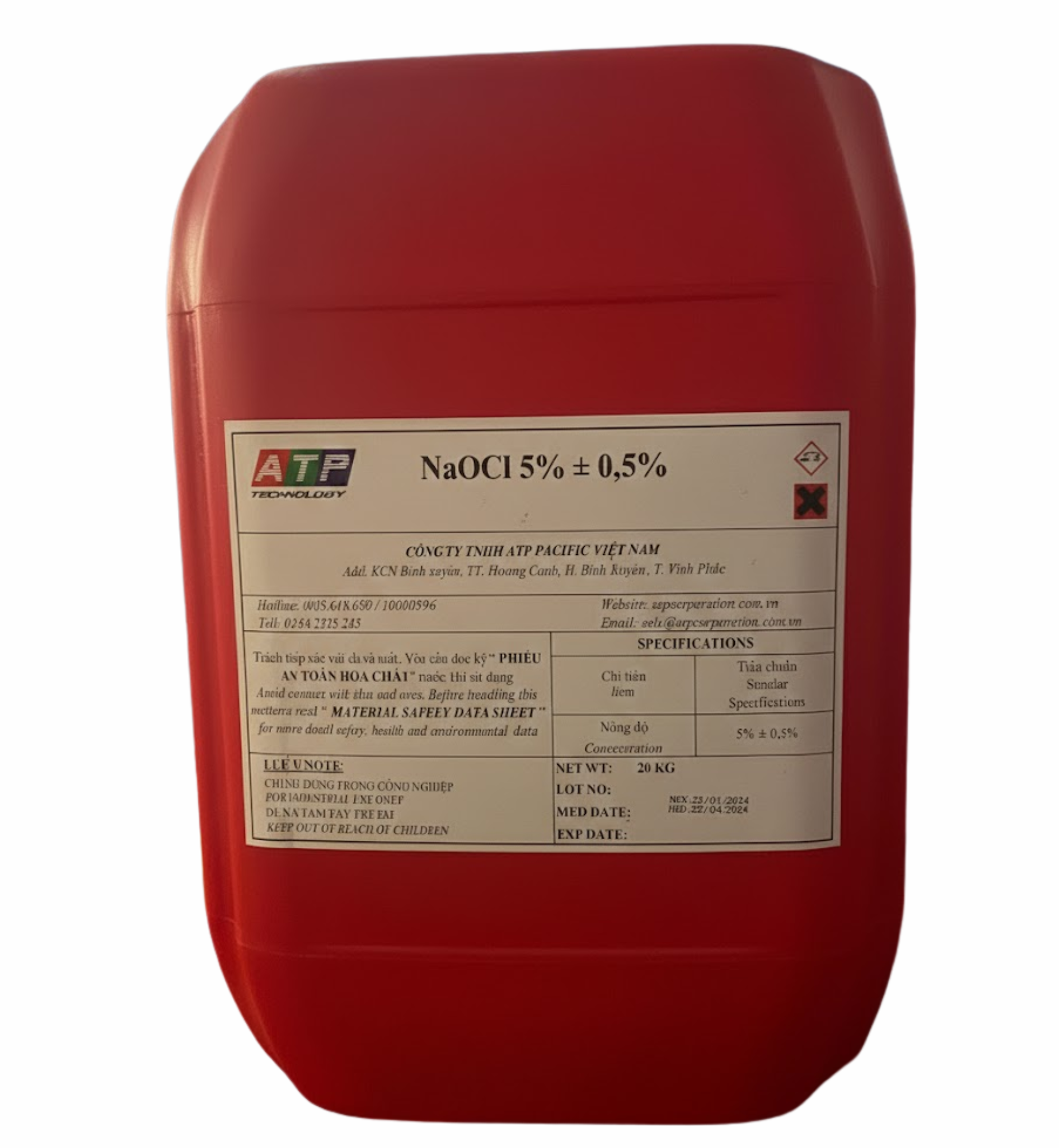
Concentration: 10% ± 2%, 5% ± 0.5%
Color: Pale yellow
Odor: Slightly pungent, unpleasant
Physical State: Liquid solution (Javel water)
Melting Point: 18°C
Boiling Point: 101°C
Density: 1 L = 1.150 kg
Properties:
- Soluble in water
- Strong oxidizing agent but unstable
Packaging:
- Plastic cans: 25–30 kg
- Plastic drums: 250 kg
Storage & Handling:
- Store in tightly closed plastic containers; do not use metal containers.
- Keep in a dry, ventilated area, away from sunlight and heat.
- Do not open containers unnecessarily.
- Best used within 5–6 months after opening.
Chemical Characteristics
- Sodium hypochlorite is unstable, a strong oxidizer that decomposes easily under acidic conditions, releasing chlorine gas.
- Reacts strongly with metals (Fe, Ni, Cu, Co, Mn), metal salts, and acids; can be corrosive.
- Reaction products are salts and water.
Uses of Sodium Hypochlorite (NaOCl)
NaOCl is a strong oxidizer with bleaching, deodorizing, and disinfecting properties. It increases water pH and kills bacteria and fungi effectively.
Applications:
| Application | Function / Effect |
|---|---|
| Swimming pools, water supply, industrial wastewater | Increases water pH; strong oxidation breaks down pigments and microbial contaminants |
| Laundry, textile bleaching | Oxidizes chemical bonds in stains and chromophores, removing color and dirt from fabrics |
| Aquaculture and livestock | Disinfects water and surfaces to kill bacteria |
| Households, hospitals, restrooms | Deodorizes and disinfects contaminated areas |
Safety Precautions
- Avoid ingestion, inhalation, and contact with skin or eyes.
- Wear protective equipment (gloves, goggles, protective clothing) when handling.
- Do not allow contact with clothes as it bleaches fabric.
- Avoid releasing into drinking water, wastewater, aquaculture systems, or soil.
- Even diluted solutions are corrosive; in case of spills, wash with water or absorb with Chemizorb.
- Inhalation may cause coughing; contact with skin or eyes may cause burns or blindness at high concentrations.
- Ingestion can burn the mouth, throat, and stomach.