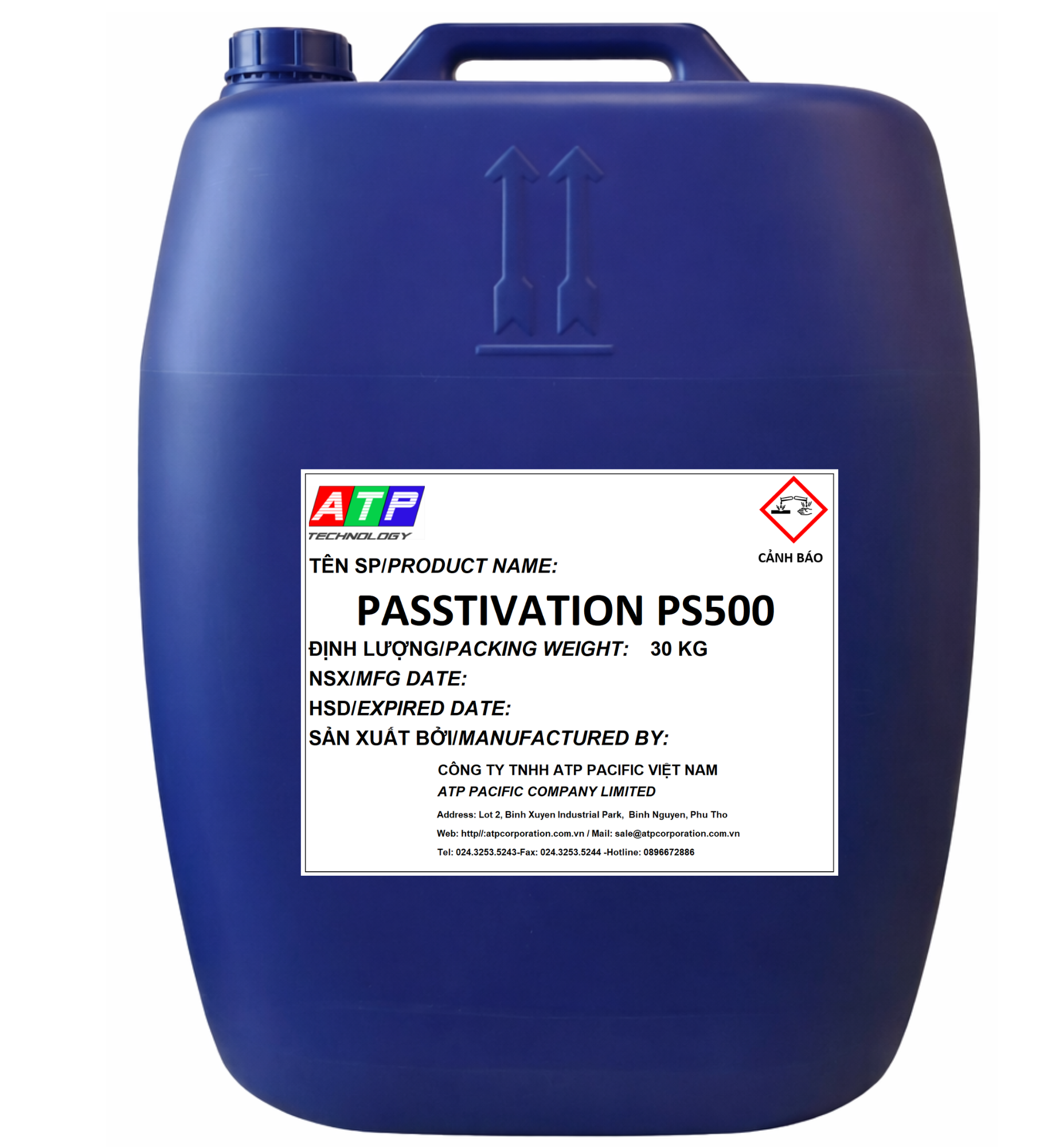
Product details
PS500 Passivation Chemical is a passivation agent researched and developed by ATP, applied after the phosphating process of metal surfaces. Its primary function is passivation, rust prevention, and anti-yellowing. PS500 forms a protective film on the metal surface, preventing oxidation, and is especially effective in preventing phosphate coating from yellowing during storage or before painting. PS500 can be used after phosphating or after sandblasting for short-term protection. Under normal conditions, it provides rust protection for up to 1 month, and 3–4 days for parts that are only sandblasted without phosphating. PS500 is used in the final stage of the chemical surface treatment process using phosphating.
Product Information
Product Name: PS500 Passivation Chemical
Origin: ATP Pacific
Packaging: 30 kg/can
Physical State: Liquid
Color: Slight gray
Odor: Mild pungent odor
Water Solubility: Soluble in water
Property: Mild alkaline
Working Mechanism of PS500
The components in PS500 neutralize residual acids remaining on the metal surface after phosphating, bringing the surface to a neutral state while forming a thin, insoluble film uniformly covering the phosphate layer. This film slows down oxidation and limits exposure to air and moisture. As a result, it also enhances the adhesion of subsequent coating layers.
Instructions for Use
- Fill 1/3 of the tank with water
- Slowly add PS500 with gentle stirring until completely dissolved
- Fill up with water to the required level
Operating Parameters
- Dosage (g/L): 10 (6 – 20)
- pH: 8.5 (8 – 9)
- Color: Light yellow
- Time (minutes): 5
- Temperature (°C): 85 (60 – 90)
Key Advantages of PS500
- Effective rust prevention after phosphating
- Prevents yellowing of phosphate coating during storage
- Improves adhesion of subsequent coatings
- Suitable for post-sandblasting treatment
Safety Precautions
PS500 is an alkaline liquid; therefore, appropriate safety measures must be followed, including wearing rubber gloves, safety glasses, masks, boots, and ensuring proper ventilation.
First Aid Measures
- Skin/clothing contact: Remove contaminated clothing immediately and rinse with water for at least 15 minutes
- Eye contact: Remove contact lenses, rinse gently with clean water for 15 minutes, rest, and seek medical advice
- Inhalation: Move to a well-ventilated area; if breathing is difficult, provide oxygen and seek medical attention
- Ingestion: Drink plenty of water; do not give anything by mouth if the person is unconscious; seek medical attention immediately
Storage and Handling
Store in a cool, well-ventilated area. Ensure proper labeling with manufacturing and expiry dates. Always keep containers tightly closed.