- Home
- Introduction
- Products
- Shop
- News
- Library
- POLICY


PAM – Polyacrylamide
Polyacrylamide (PAM) is a water-soluble polymer that is insoluble in most organic solvents.
Commercial PAM is typically available in two forms: white solid powder and emulsion, both synthesized and manufactured for specific applications.
PAM is widely used across various industries such as wastewater treatment, mining, oil extraction, paper manufacturing, and other chemical-related sectors. In wastewater treatment, PAM acts as a flocculant aid, facilitating the separation of suspended solids from water.
Based on the molecular structure of acrylamide polymer, PAM is classified into three main types:
Depending on environmental conditions, different types are selected to achieve optimal performance:
Application Guidelines
PAM is typically diluted and dissolved in water at a ratio of 0.5–1% before being dosed into the wastewater treatment system.
The typical dosage ranges from 0.05% to 0.15% of the mass of impurities to be removed, depending on influent water quality.
Market Demand for Polyacrylamide
The global demand for PAM in wastewater treatment alone reached USD 1.56 billion in 2016. With the growth of global industries and increasing environmental awareness, PAM demand is rising rapidly.
In addition to wastewater treatment, applications in oil & gas, paper, and mining industries are key drivers of market growth.
It is estimated that by 2025, the global market will reach USD 6.83 billion, with an annual growth rate of 6.1%.
Major global suppliers of PAM include: Kemira, BASF, Chinafloc, SNF, Ashland, Anhui Jucheng Fine Chemical Co., Ltd. (CJCC), Black Rose Industries Ltd., Shandong Polymer Bio-chemicals Co., Ltd., Xitao Polymer Co., Ltd., Dongying Kechuang Biochemical Industrial Co., Ltd., Anhui Tianrun, and ATP.
ATP // Anionic Polyacrylamide
Anionic polyarylamide (APAM) is a water-soluble polymer. It is mainly used for flocculation, settling and cleaning of industrial wastewater in serious industries such as steelmaking, electroplating plants, metallurgy, coal washing, sewage sludge, etc. In addition, it can be used for drinking water purification and purification purposes.
Anionic polyacrylamide allows particles to be reassembled by absorbing suspended solids in water, because its molecular chain contains a certain amount of polar groups. It can accelerate the settling of particles in suspended liquid. In addition, this type of water treatment chemicals can obviously accelerate the clarification of solutions and also facilitate filtration.
Featured
1. With excellent water solubility, polyacrylamide anion can be completely dissolved in cold water.
2. A small amount of APAM can achieve a large flocculation effect. In most cases, a supplement of 0.01 – 10 g/m3 is needed to take full advantage.
3. The combination of polyacrylamide anion and inorganic coagulants (such as polyferric sulfate, polyaluminium chloride, ferric safl, etc.) can produce excellent effect.
Technical parameter of ATP products
| PAM | Molecular Weight | Degree of Ion | Water Insoluble | Purity % | Dissolution | TimeResidual Monomers |
| Anion | 3 – 25 | 10-90% | ≤0.5% | ≥90% | ≤0.5 hrs | ≤ 0.05% |
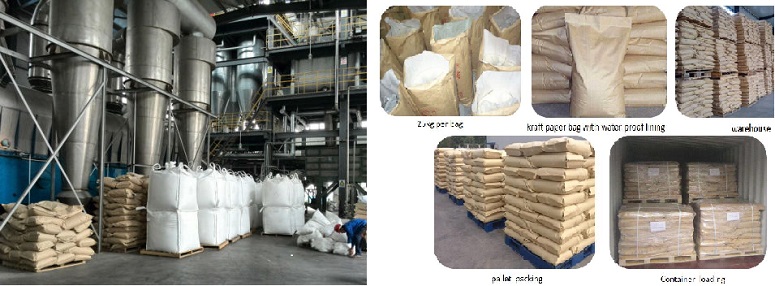
Package: Two – layer PE bag, or in two – layer bag with PE inside and PP ( or kraft) outside
Both 20kg/bag and 25 kg/bag are available.
|
Product Name |
Model |
Appearance |
Solid Content (%) |
Molecular Weight (Million) |
Hydrolysis Degree (%) |
pH value |
Dissolving Time (min) |
Technical document |
|
Anionic polyacrylamide |
A2718 |
White granule/emulsion |
≥89% |
18 – 20 |
25 – 29 |
4 – 8 |
≤ 60 |
Link COA |
| A2320 |
White granule/emulsion |
≥89% |
20 – 27 |
23 – 25 |
4 – 8 |
≤ 60 |
Link COA | |
| A2327 |
White granule/emulsion |
≥89% |
27 – 28 |
23 – 25 |
4 – 9 |
≤ 60 |
Link COA | |
| A2015 |
White granule/emulsion |
≥89% |
15 – 16 |
20 |
4 – 9 |
≤ 60 |
Link COA | |
|
Nonionic polyacrylamide |
N0510 |
White granule/emulsion |
≥89% |
9 – 11 |
≤5 |
4 – 7 |
≤ 60 |
Link COA |
Cationic Polyacrylamide
1. Cationic polyacrylamide is a linear polymer that can be abbreviated as CPAM. With many active groups, it has a high affinity for numberous substances to form hydrogen bond.
2. Cationic polyacrylamide is mainly used as cationic flocculants to flocculate the negatively charged colloids. It gives multiple functions such as turbidiry removal, decoloring, absorption, adhesion, and more.
3. As a popular selection of wastewater treatment chemicals, cationic polyacrylamide is ideal for the treatment of wastewater with high content of organic colloids in different industries such as the dyeing, papermaking, food, construction, metallrgy, ore dressing, pulverized coal, oilfield, fermentation, and the aquatic products processing, etc.
4. Cationic polyacrylamide is especially suitable for the dehydration of municipal sewage, municipal sludge, papermaking sludge, and other industrial sludge.
Features
1. The cationic polycrylamide can be entirely dissolve in cold water due to high water solubility.
2. Low doses of CPAM provide a huge flocculation effect.
3. This water treatment product can be used together with polyferric sulfate, polyaliminium chloride, ferric salts, and other substances, which can offer a significant effect.
Technical Parameters
| PAM | Molecular Weight | Degree of Ion | Water Insoluble | Purity % | Dissolution Time | Residual Monomers |
| Cation | 2-12 | 10-60% | ≤0.5% | ≥90% | ≤1.5hrs | ≤ 0.05% |
Package
Two – layer PE bag, or in two – layer bag with PE inside and PP ourside
Both 20kg/ bag and 25kg/bag are available.
|
Product Name |
Model |
Appearance |
Solid Content (%) |
Molecular Weight (Million) |
Degree of Ion |
pH Value |
Dissolving Time (min) |
Technical document |
| Cationic poly
acrylamide |
C0510 |
White granule/emulsion |
≥89% |
9 – 11 |
5 |
6 – 8 |
≤ 60 |
Link COA |
|
C1514/C1312 |
White granule/emulsion |
≥89% |
12 -15 |
15 |
6 – 8 |
≤ 60 |
Link COA | |
|
C2012 |
White granule/emulsion |
≥89% |
10 – 12 |
20 |
6 – 8 |
≤ 60 |
Link COA | |
|
C3006/C4306 |
White granule/emulsion |
≥89% |
6 – 8 |
30 |
6 – 8 |
≤ 60 |
Link COA | |
|
C3012 |
White granule/emulsion |
≥89% |
10 – 12 |
30 |
6 – 8 |
≤ 60 |
Link COA | |
|
C4008 |
White granule/emulsion |
≥89% |
6 – 8 |
40 |
6 – 8 |
≤ 60 |
Link COA | |
|
C5008 |
White granule/emulsion |
≥89% |
6 – 8 |
50 |
6 – 8 |
≤ 60 |
Link COA |
No products were found matching your selection.